

Insurance-covered treatment for armpit odor in Osaka (Tenroku)
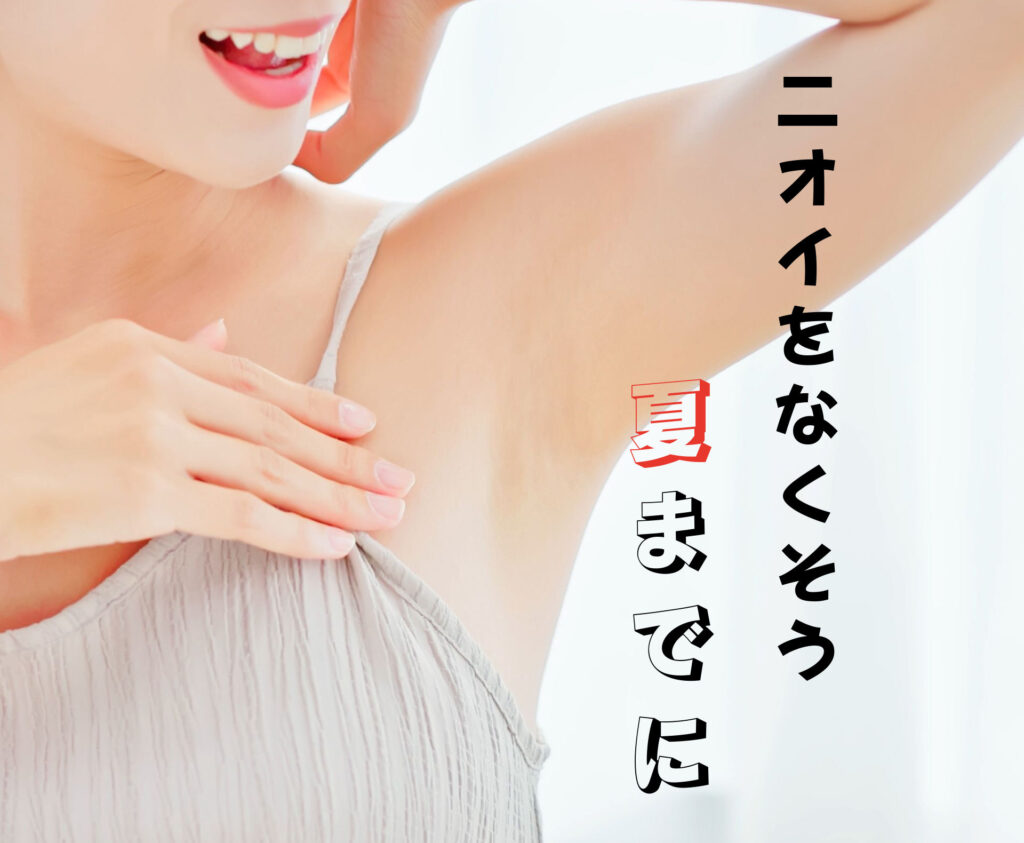
Armpit odor (axillary malodorsis) is a condition that causes a characteristic odor in the axillae (armpits). Odor is a delicate problem,
Many people want to know quickly, "Can I be treated with insurance?", "How much does it cost?", and "What is the process of treatment?"
On this page, you will find information about the Kamogawa Clinic (Tenroku, Osaka).Insurance-covered armpit treatmentThe following is an easy-to-understand summary of cost estimates, treatment flow, and precautions regarding
Summary of key points (Conclusion)
- This page is called "Insurance coverage, cost and flow(For a comprehensive explanation, go to a separate page).
- Approximate cost of 30% health insurance:Both sides Approx. 52,000 yen(Including anesthesia fees / consultation fees, blood tests, etc. are not included).
- Treatment proceeds in the following order: consultation → explanation of treatment plan → surgery (at a later date) → postoperative fixation and hospital visit (indications are determined at the consultation).
- For consultations with children and minors, please go to the dedicated page:/en/wakiga-child/
At the consultation, we will sort out whether or not the patient has axillary malodor/severity/possibility of other causes such as hyperhidrosis or dermatitis, and suggest the best option.
What is armpit cancer (axillary malodor) (just the gist)
Armpit odor, also called axillary odors, is a condition that causes a characteristic odor in the axillae (armpits).
The odor is believed to be strong due to the decomposition of components derived from apocrine sweat glands by the action of bacteria on the skin surface.
Apocrine sweat glands tend to increase in activity after puberty and are also influenced by genetic factors, body constitution, and life background.
/en/osmidrosis/ (Comprehensive armpit cancer (axillary odor) in Osaka)
Treatment with insurance coverage: coverage and concept
Whether or not insurance will cover the treatment will be determined by evaluating the condition of the axillary odor in a medical examination.
Since the perception of odor varies from person to person, there may be cases where the problem is strong but medically very mild (or of a different cause).
In such cases, do not rush into surgery, but first sort out the cause and consider less burdensome measures.
The "insured/uninsured" decision will be based on the intensity of the odor, obstacles to living, skin condition, and previous treatment.
Approximate cost (30%: approx. 52,000 yen)
30% insurance coverage:Surgery on both left and right sides. Approx. 52,000 yen(Approximate cost including anesthesia costs)
*In addition to the cost of surgery,Medical examination fee, blood test fee, etc.is required (both will be covered by insurance).
*Amounts are approximate. They are subject to change depending on the nature of the medical treatment, system revisions, etc. The latest estimate will be explained at the time of consultation.
Insurance Company Benefits
Depending on your insurance coverage, you may be eligible for surgical benefits. Please check with your insurance company for details.
Osaka City's Medical Expense Subsidy System for Children
There are systems that subsidize part or all of the out-of-pocket expenses, such as the Children's Medical Expense Subsidy System and the Medical Expense Subsidy System for Single-parent Families.
Eligible ages, co-payment, and application procedures vary by municipality.
(Reference:Osaka City: Subsidies for children's medical expenses)
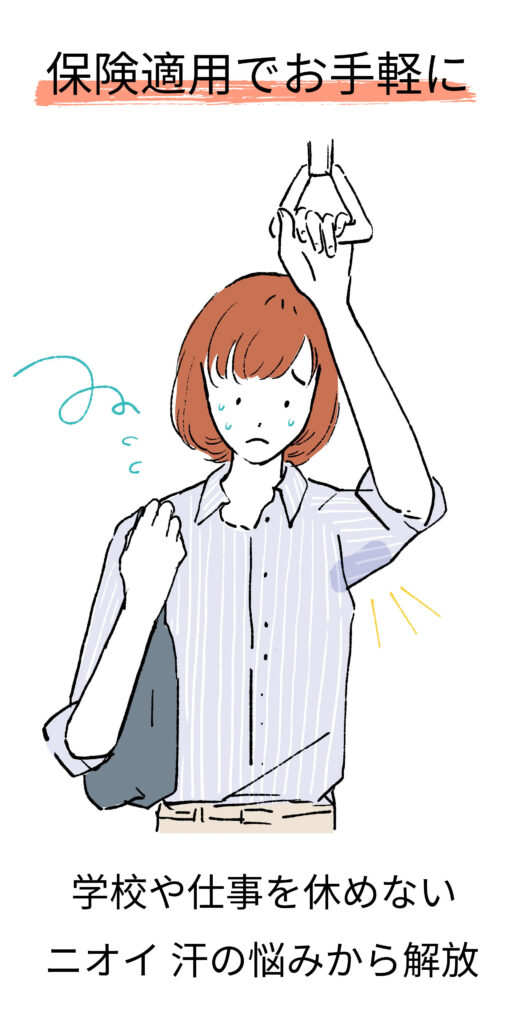
Flow of treatment from initial consultation to treatment
- Initial consultation (examination and evaluation)The following information will be sorted out: whether or not the patient has axillary odor, the severity of the disease, the amount of sweat (possible hyperhidrosis), and whether or not the patient has skin problems.
- Explanation of treatment planThe following information is provided: availability of insurance coverage, treatment options, expected benefits and limitations, and risks.
- Treatment (often by appointment at a later date)The first day of the consultation is for explanation only, and treatment may be scheduled for a later appointment.
- Postoperative management and hospital visitsFixation, wound management, and follow-up observation (the number of times required depends on the condition).

Postoperative fixation and living precautions (summary)
Postoperative immobilization and lifestyle restrictions (arm movement, bathing, resumption of exercise, etc.) vary depending on the surgical procedure.
For a certain period of time after surgery, in order to prevent complicationsRest and immobilizationcan be important.
- Method and duration of immobilization (depending on the surgical technique and condition)
- Timing of resumption of bathing/showering (varies with surgical technique and wound condition)
- Range of motion of the arm and guidelines for return to sports (to be explained at the time of consultation)
- Scarring, pigmentation, and tightness (often improves over time, while scarring may remain)
Complications and Risks (Summary)
Possible complications after surgery include hematoma (blood clots under the skin), infection (pus), and associated skin problems.
Fixation and lifestyle restrictions may be necessary for prevention.
In addition, skin tightness (contracture) and pigmentation may occur for a while after the surgery, but often improve with time,
Surgical scarring is possible. A side effect may be a decrease in axillary hair.
For those who have had inadequate results at other hospitals, re-treatment
Those who have received treatment for armpit cancer at other medical institutions but have had difficulty feeling the effects are also seen.
This may be due in part to the remaining apocrine sweat glands that are the cause of the problem.
At the Kamogawa Clinic in Tenjinbashisuji 6-chome, Osaka, we will evaluate the condition after treatment at other clinics and consider re-treatment within the scope of insurance coverage if necessary.
Also, please consult with us if you are concerned about “scarring” after treatment.
Consultation for children (minors) with arachnorrhea
If you are looking for "Osaka armpit moth, children," we have compiled a page dedicated to children.
In the case of children, evaluation is important first because there are many other factors such as sweat, clothing, and skin problems.
/en/wakiga-child/(Guidelines for consultation, measures, and school life)
Self-care (supplementary measures)
Here are some ways to reduce underarm sweat/odor:
- Use of antiperspirantsThere are two methods: physically blocking sweat with antiperspirants containing aluminum chloride, and using ointments containing anticholinergics to make it harder for the sweat glands to receive commands.
- Choosing the right clothingChoose clothing made of natural materials (e.g., cotton) that are breathable.
- Use of body powderSweat absorbs perspiration and keeps the skin dry.
- Maintain a healthy weight: Overweight may promote excessive sweating.
- Stress ManagementReduce sweating triggers through: relaxation (meditation, deep breathing, etc.).
- Balanced diet: Moderate spicy foods, caffeine, and alcohol.
- Regular exercise: Regular exercise helps to improve the constitution.
- Keep it cleanReduce perspiration and bacterial growth by: showering, etc.
- Underarm hair management: Helps reduce perspiration and bacterial adhesion and odor development.
These can help reduce the amount of sweat, but may not be effective enough for smelly sweat (derived from apocrine sweat glands), which is characteristic of armpits.
If ineffective, treatment options will be considered.
Features of the Kamogawa Clinic
The number of surgeries under local anesthesia ranges from 950 (coronary period) to 1,200 cases per year.
Started seeing patients in Shijo-Kawaramachi, Kyoto. We have been providing community-based medical care for many years.
The company consists of several physicians who have educated medical students and residents at university hospitals and general hospitals.
Registered as a community health care training hospital in a program to become a plastic surgeon
FAQ
Q. Can I always get treatment covered by insurance?
Whether or not insurance coverage is available will be determined by a medical examination. After sorting out the condition, the obstacles to living, and the possibility of other causes, we will propose the most appropriate method.
Q. What are the other costs besides the 52,000 yen for 30% of the cost?
In addition to the surgery fee (including anesthesia), consultation fee, blood test fee, etc. are required. We will explain the approximate amount at the time of consultation.
Q. Does the surgery completely eliminate the odor?
A reduction of strong odors is expected in many individuals, but may be difficult to achieve complete zero or regression may occur. Indications and prospects will be explained at the consultation.
Q. Can children consult with you?
Yes, the child's age is a factor in the evaluation. In the case of children, the evaluation is important first, as there are many other factors. Dedicated page:/en/wakiga-child/
Inquiries and Reservations
We will provide a clear explanation of the availability of insurance coverage, cost estimates, and the treatment process at the consultation.
(*If you have symptoms that are suspected to be an emergency, please consult a medical institution.)
About this article (Created, supervised and disclaimer)